
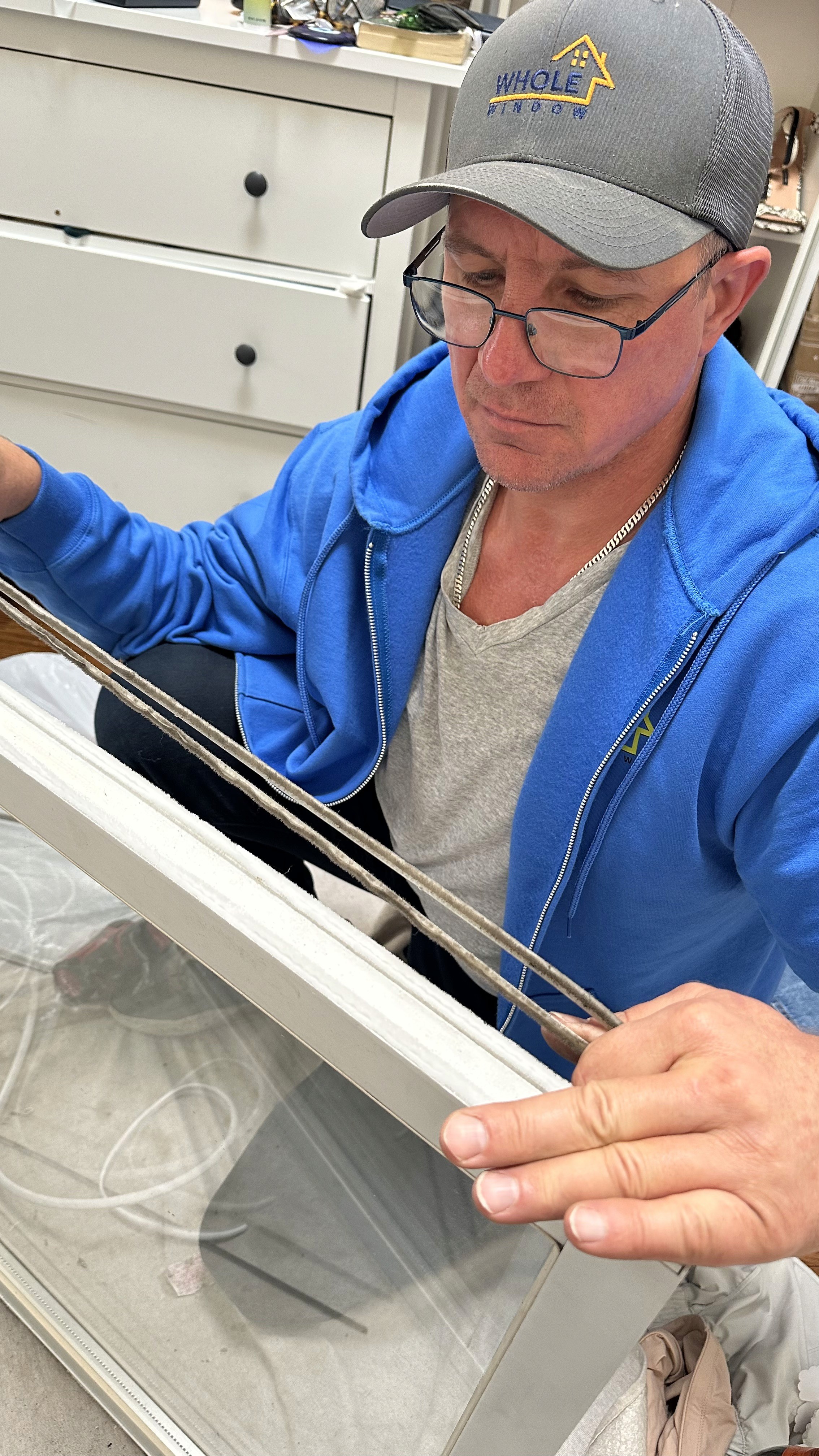
Weatherstripping & Insulation
Drafty windows in Boston? We seal air leaks with new weatherstripping and insulation — cut energy bills and improve comfort. Free estimates.
Window Weatherstripping & Insulation in Boston | Stop Drafts
Need a window repair?
Window Weatherstripping & Insulation in Boston
Drafty windows are not just uncomfortable. They cost you money every winter.
In a typical Boston home, up to 30% of heating costs go out through the windows. Most of that loss is air moving through gaps around the sash, not heat passing through the glass. That is good news: air leaks can be sealed for a fraction of what replacement costs, and the original windows stay in place. We weatherstrip wood windows across Boston and the western suburbs, including historic homes where replacement is not allowed. Weatherstripping is part of our full wood window repair service.
Signs your windows need weatherstripping
Cold drafts you can feel with your hand while the window is closed and locked
Visible daylight or gaps between the sash and the frame
Old weatherstripping that is compressed flat, torn, painted over, or missing entirely
The window rattles in the wind
Curtains move when the window is shut
Frost or condensation on the inside of the glass in January
Heating bills climbing year over year with no change in habits
What it costs
Historic bronze weatherstripping installation is $275 per window. That price covers both sashes of a double hung: we remove the sashes, install spring bronze in the jambs and along the meeting rail, add sealing components where needed, and rehang the window so it still opens smoothly. The window looks exactly the same when we are done, which is the point on a historic house.
Lighter work costs less. If your windows already have sound weatherstripping and the problem is a loose fit, a stuck sash, or a lock that no longer pulls the sashes together, a tune up may be all you need. We price that separately after seeing the window.
Estimates are free. Send photos of the drafty window, the side channels and the meeting rail along with your address, and we will price the job by email. If the photos leave something unclear, or the sashes need work beyond weatherstripping, we come out and measure at no charge.
Get your price from photos
Send photos of the drafty windows with your address and we will quote by email, usually the same day. Start with the form and we will tell you exactly which photos we need.
Where the air actually comes in
A double hung window leaks in four places, and they are not equally bad. Most of the air comes through the meeting rail, where the two sashes overlap in the middle, and through the side channels the sash slides in. The bottom rail against the sill and the top of the upper sash matter less but still add up. Sealing only the perimeter and skipping the meeting rail is the most common mistake we find on windows someone has already tried to fix.
We wrote up the full breakdown, including the tested performance numbers for each system, in our guide to weatherstripping historic wood windows in Boston. If you want the technical detail before deciding, start there.
What we install
Spring bronze
Thin bronze strip, nailed into the jamb, that flexes against the sash. It is the system originally used on these windows and it is what we install on historic work. It lasts 30 years or more, it is invisible when the window is closed, and it is fully reversible, so nothing about the original window is altered permanently. It is also the only option that survives repeated painting and seasonal wood movement without going flat.
Silicone bulb
A silicone tube set into a routed kerf. It seals tighter than bronze on a window with an uneven gap, and it stays flexible in cold weather where vinyl and rubber stiffen. We use it on meeting rails and on sashes where the gap is too wide for bronze alone. It requires cutting a groove, so it is better suited to windows that are already coming out for other repairs.
Foam and vinyl
Cheap, fast, and short lived. Adhesive foam compresses permanently within a season or two and the adhesive pulls paint when removed. We do not install it as a solution. If your windows have it now, we take it off before doing the real work.
Casement and awning seals
These windows close against a continuous compression seal rather than sliding. When the seal hardens and cracks, the window leaks even though it latches. We replace deteriorated seals with new EPDM or silicone bulb stock.
Glazing and putty
Air also comes in where the glass meets the sash once the glazing putty has cracked or fallen out. On an old window this is often a bigger leak than the perimeter. We re-glaze with traditional linseed oil putty on historic sashes and modern glazing compound on newer ones.
Weatherstripping and sash cords go together
If your sashes are painted shut or the ropes are broken, the sashes are already coming out of the frame for sash cord and pulley repair. That is the moment to weatherstrip, because the labor overlaps almost completely. Doing both at once costs meaningfully less than doing them in separate visits, and you end up with a window that opens easily and seals shut.
What we do not do
We do not fabricate new storm windows or interior storm panels. If you already own them, we can install and seal them. We also do not weatherstrip sliding patio doors. And we do not sell replacement windows: our answer to a drafty window is to fix the window you have.
How the job runs
On-site assessment. We check every window you are concerned about, find where the air is actually moving, and tell you which windows are worth doing and which are already sealing fine.
Written quote. Priced per window, so you can do the worst rooms first and the rest next year.
The work. Most windows are done in a single visit. Sashes come out, bronze and seals go in, hardware is adjusted so the lock pulls the sashes tight, and the window is rehung and tested.
Warranty. One year on labor and materials, with a five year extended warranty available.
Why this matters in Boston
Boston winters are long and the heating season runs from October into April. With heating costs averaging $1,500 to $3,000 per home per winter, cutting heat loss by 15% saves $225 to $450 every year. Weatherstripping typically pays for itself in two to three winters and then keeps paying. The comfort difference shows up immediately: a sealed window stops the cold floor draft in the room, which is usually why people call us in the first place.
Questions we get
What is the alternative to putting plastic film on windows?
Weatherstripping is the alternative, and it is permanent. Shrink film works because it stops air movement, which is exactly what weatherstripping does, except film has to be reapplied every fall, it seals the window shut for the season, it looks like plastic, and the tape often takes paint or finish with it in spring. Sealing the sash itself solves the same problem once. We walk through the full diagnosis and every alternative in how to stop window drafts without plastic film.
Can leaky windows be repaired, or do they need to be replaced?
Almost always repaired. Old growth wood sashes are better material than anything on the market today, and a leaky window is a hardware and sealing problem, not a dead window. Replacement makes sense when the frame is structurally gone, and even then we usually rebuild the rotted section instead.
How do I stop drafts around windows in winter?
Find where the air is coming from before sealing anything. Hold a lit match or an incense stick near the meeting rail, the side channels, and the sill on a windy day and watch the smoke. If it moves at the meeting rail, caulking the trim will do nothing. That is the single most common wasted effort we see.
Will weatherstripping stop my window from opening?
No. A correctly installed bronze system adds friction you can feel for the first few weeks and then settles. If the window was hard to open before, it is usually because of paint or broken cords, and we address that as part of the job.
Do you work on historic and landmarked homes?
Yes, and it is most of what we do. Spring bronze is the system historic commissions expect, because it is reversible and invisible from the street. We work regularly in districts where replacement windows are not permitted.
Can you do it in winter?
Yes, we work through the winter. But the work is easier and the schedule is open in September and October, and you get the savings for the whole heating season instead of half of it.
Book before the heating season
Our weatherstripping schedule fills from late September through November, when everyone notices the drafts at once. If you already know which rooms are cold, send photos for a free quote or call (617) 982-1211. We work across Boston, Newton, Brookline, Wellesley, West Roxbury, and the Greater Boston area.